How to talk to your partner about perimenopause
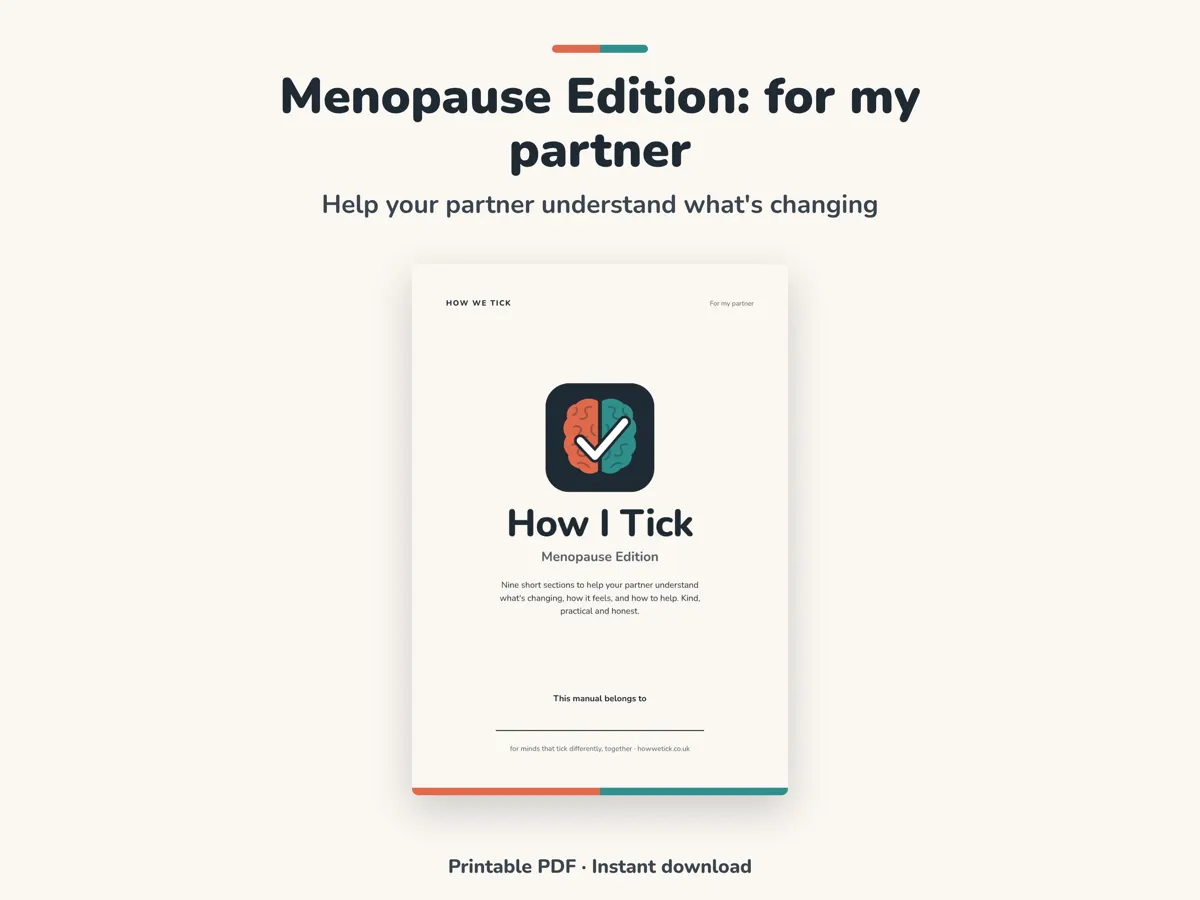
Ways to help your partner understand what's changing during perimenopause and menopause, and what helps on the hard days.

Perimenopause can change sleep, mood, memory and body temperature, sometimes all in one week. Partners often notice the changes before they understand them. Talking about it early can stop a lot of misreading.
Share the parts you want to
You don't have to explain everything. Pick the changes that affect the two of you most, and start there.
Explain what it looks like at home
- "If I'm short with you, I'm probably boiling or exhausted, not cross with you."
- "If a word disappears mid-sentence, I'm still listening."
- "After a bad night, I need a gentler day."
Agree a signal for hard days
A simple word, card or text that means "today's a hard one" saves explaining when you have the least energy to do it.
Talk about closeness, too
If intimacy feels different, saying so, gently and early, helps your partner not take it personally.
For information about perimenopause and menopause, see the NHS website or speak to your GP.
This guide is general information to help with communication. It isn't medical advice. If you need support, speak to your GP or a qualified professional.